

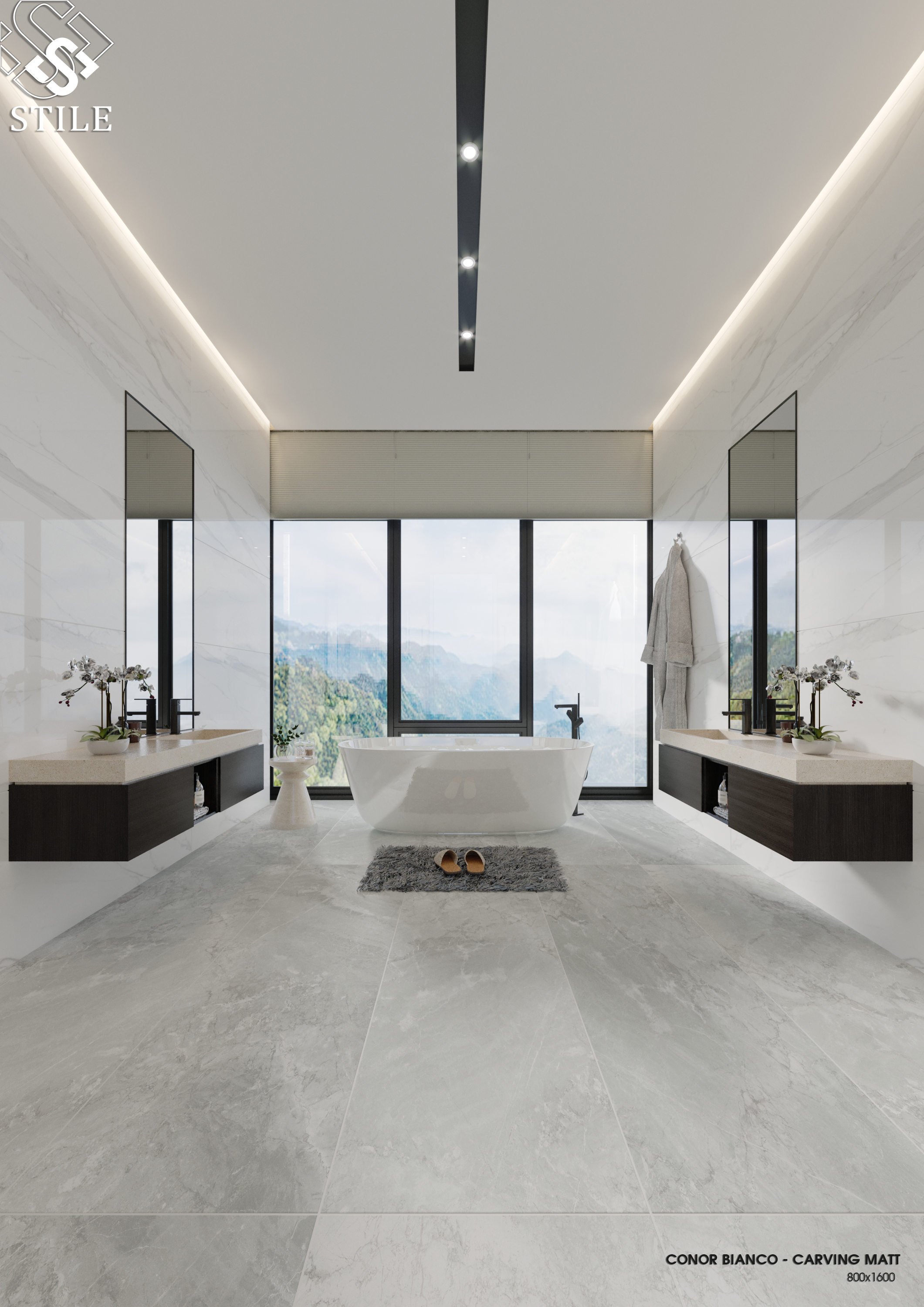
In bathrooms, materials not only need to look beautiful but also perform reliably in constantly humid environments. With its dense structure, near perfect water resistance, and high durability, sintered stone for bathroom applications is increasingly being chosen by architects as a complete material solution for walls, flooring, and interior surfaces, creating spaces that are both cohesive and long lasting over time.
1. Which Type of Sintered Stone Should Be Chosen for Bathroom Wall Cladding?
Wall cladding is the most important element in a bathroom because it is the area most frequently exposed to water.
When selecting wall cladding materials, architects usually prioritize:
Complete water resistance
Surfaces that are resistant to dirt buildup
Minimal visible joints
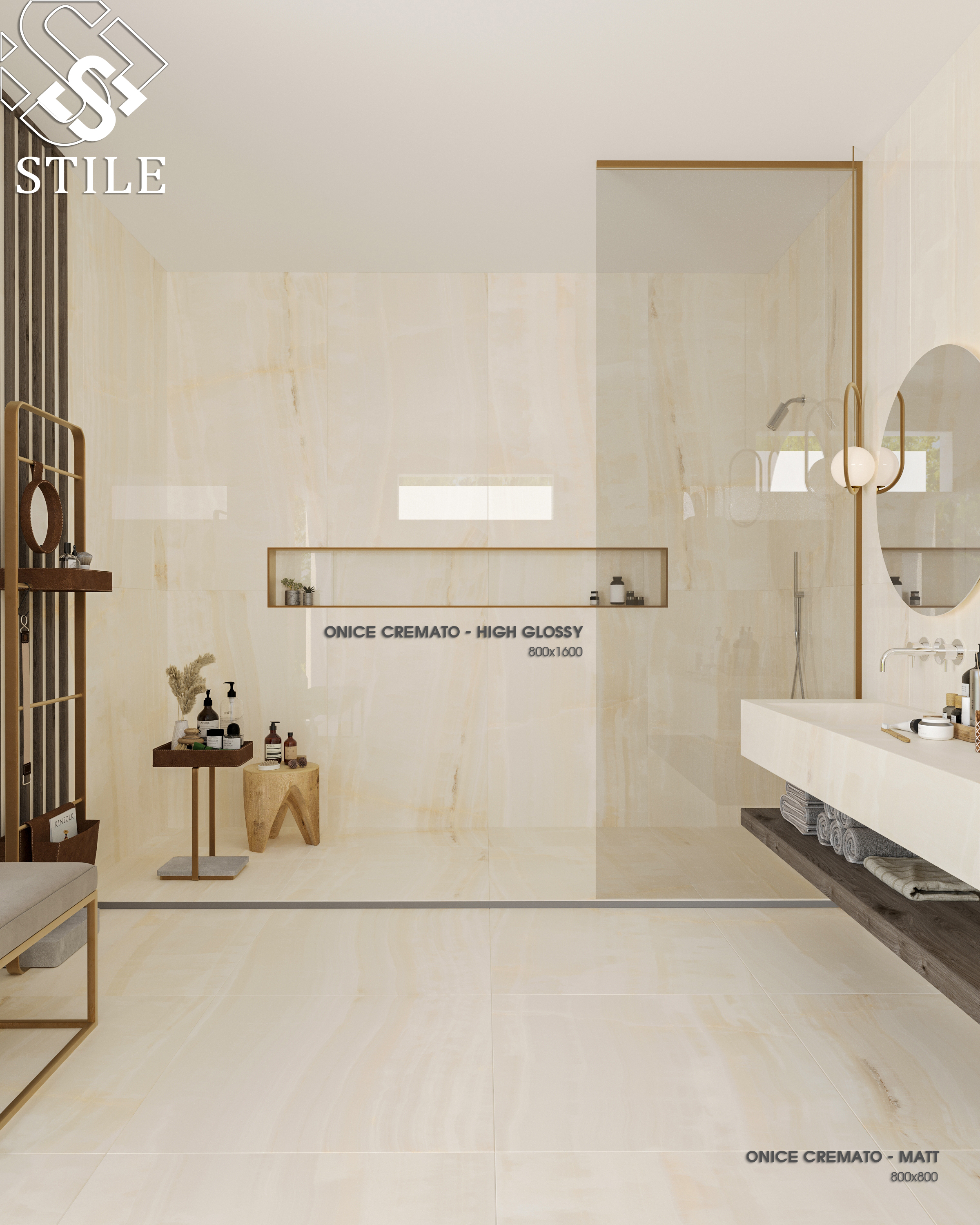
Sintered stone for bathroom wall cladding fully meets these requirements thanks to its dense structure and near zero water absorption. Since water cannot penetrate the material, issues such as yellow stains, peeling, or mold growth are significantly reduced or completely prevented.
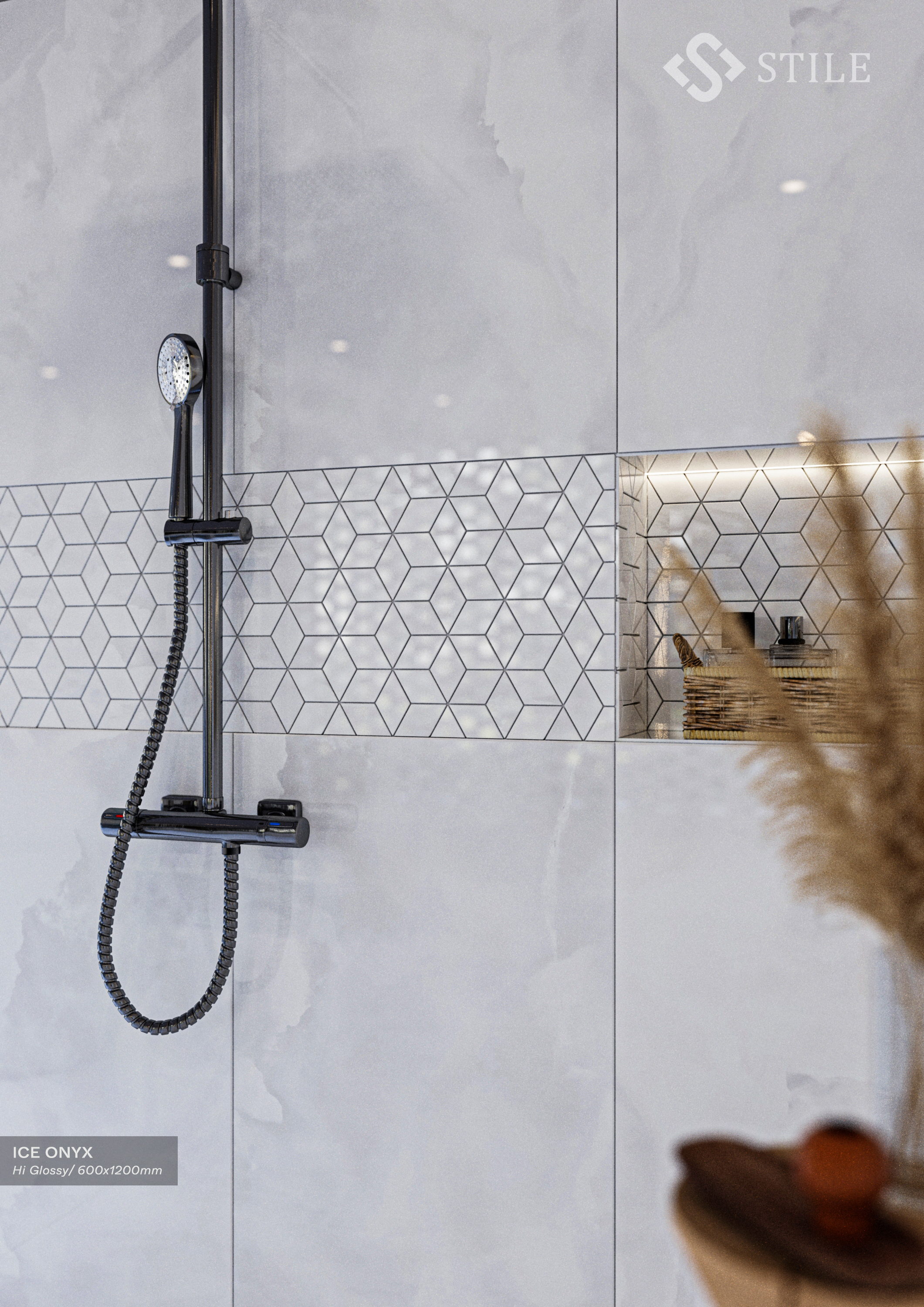
In addition, large slab sizes help minimize visible joints during wall installation, creating a more seamless appearance and making the space look cleaner and more refined.
ONICE SERPENTINO 600x1200: ONICE SERPENTINO 600x1200 suitable for wall cladding to create striking focal points.
ICE ONYX 600x1200 Glossy : enhances light reflection effects.
These collections are currently included in promotions with discounts of up to 70% during April, with available stock ready at the warehouse.
2. Which Type of Sintered Stone Should Be Chosen for Bathroom Flooring?
Unlike bathroom walls, bathroom flooring must prioritize safety during daily use.
Therefore, when selecting flooring materials, it is important to pay attention to:
Slip resistant surfaces
Good grip in wet conditions
Water resistance and low absorption
For sintered stone bathroom flooring, matte or lightly textured surfaces should be selected to ensure proper slip resistance.
One common mistake is using glossy tiles for bathroom floors, which can become slippery when exposed to water.
These product lines are currently offered at deeply discounted prices, making them suitable for projects that need to optimize costs while still ensuring quality.
3. Which Materials Should Be Used for Bathroom Interiors?
A clear trend in modern design is the use of consistent materials throughout the entire bathroom interior.
Sintered stone is not only used for wall cladding but is also applied to:
Washbasins
Countertops
Decorative shelves
Partition walls
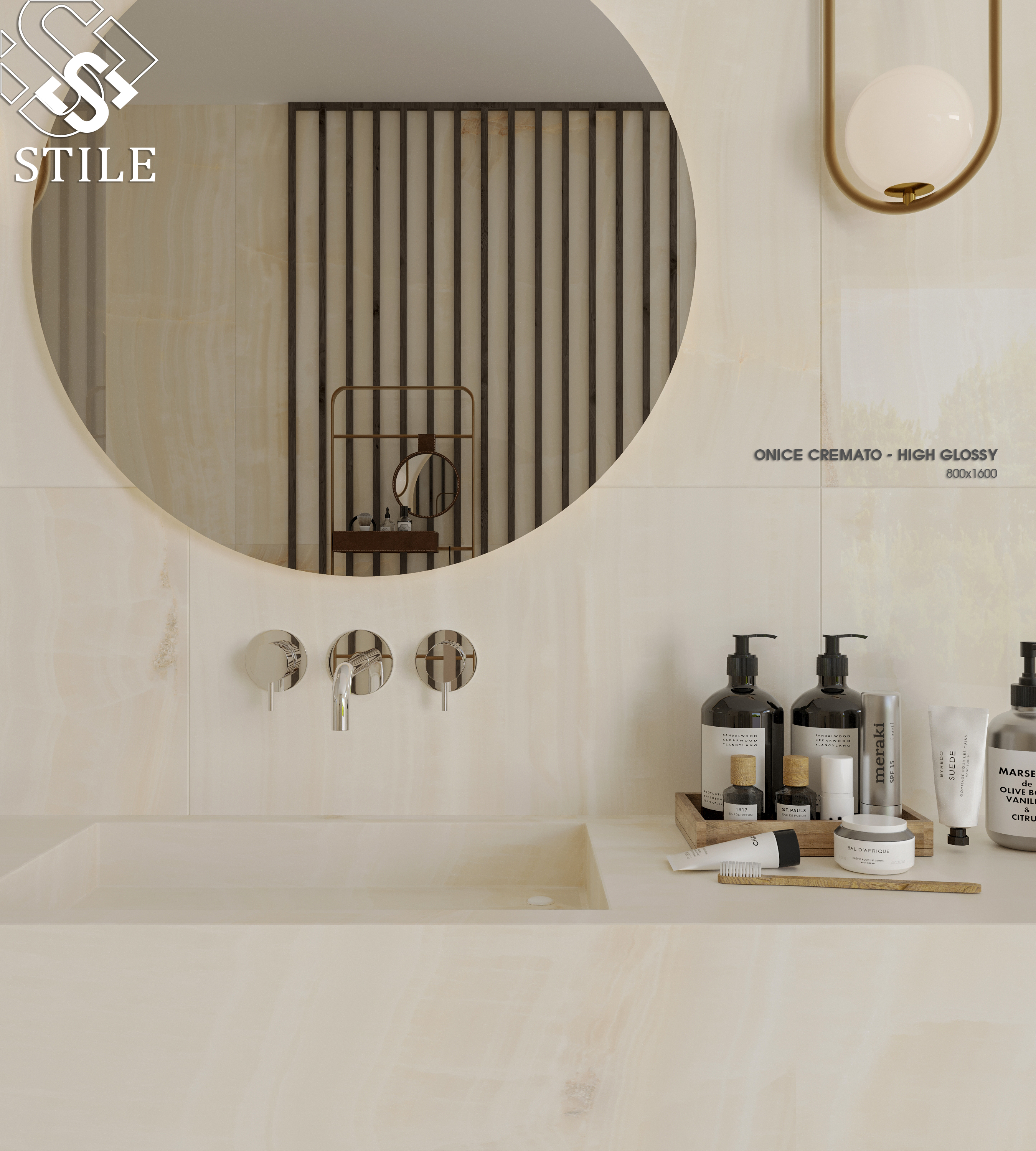
The reason architects prioritize sintered stone for bathroom interior applications is because:
- Its dense structure prevents water from penetrating the material from the inside.
- The hard surface helps minimize scratches during daily use.
- Its consistent appearance creates a deeper and more luxurious spatial effect.
When the same material is used for walls, flooring, and interior elements, the bathroom achieves a completely seamless appearance without being visually divided by different materials.
4. Why Architects Prefer Sintered Stone for Entire Bathroom Spaces?
In practical design applications, selecting materials for a bathroom is not just about choosing separate elements individually, but about viewing the space as a unified whole. This is why sintered stone for bathroom applications is increasingly being recommended by architects for the entire space, including walls, flooring, and interior features.
When different materials are used within the same bathroom, each area may have different levels of water absorption, expansion rates, and moisture resistance. Over time, this can lead to uneven deterioration. For example, the walls may still appear new while the flooring starts to discolor or the washbasin area begins to suffer from water damage.
In contrast, when sintered stone is used consistently throughout the entire bathroom, all surfaces share the same dense structure and similar water resistant properties. This helps maintain durability more uniformly and minimizes potential issues during long term use.
Another important factor is design continuity. When walls, floors, and interior elements use the same material, the space is not visually interrupted by transitions between different finishes. As a result, the bathroom feels more spacious, cleaner, and significantly more luxurious.
In addition, minimizing material variation also simplifies maintenance and cleaning. Users do not need to apply different cleaning methods for separate areas, which helps save both time and effort.
For these reasons, in modern projects, especially in the high end segment, architects often prioritize sintered stone in bathrooms as a complete material solution rather than using it only for individual applications.
5. Recommended Material Selections at STile
At STile, you can explore a wide range of materials suitable for bathrooms, from wall and floor tiles to surface solutions equivalent to sintered stone.
Currently, many imported collections from Italy and India are available with discounts of up to 70% during April, with products ready in stock.
Quantities are limited, and the promotion may end earlier once inventory runs out.
Frequently Asked Questions
Choosing sintered stone for bathroom applications not only solves water resistance concerns but also elevates the entire space when applied consistently across walls, flooring, and interior features. It is an ideal material solution for modern projects that demand both high aesthetics and long term durability.
Discover the difference. Experience sustainable design at:
Artile Gallery: 155–157 Nguyen Co Thach Street, An Khanh Ward, Ho Chi Minh City, Vietnam.