

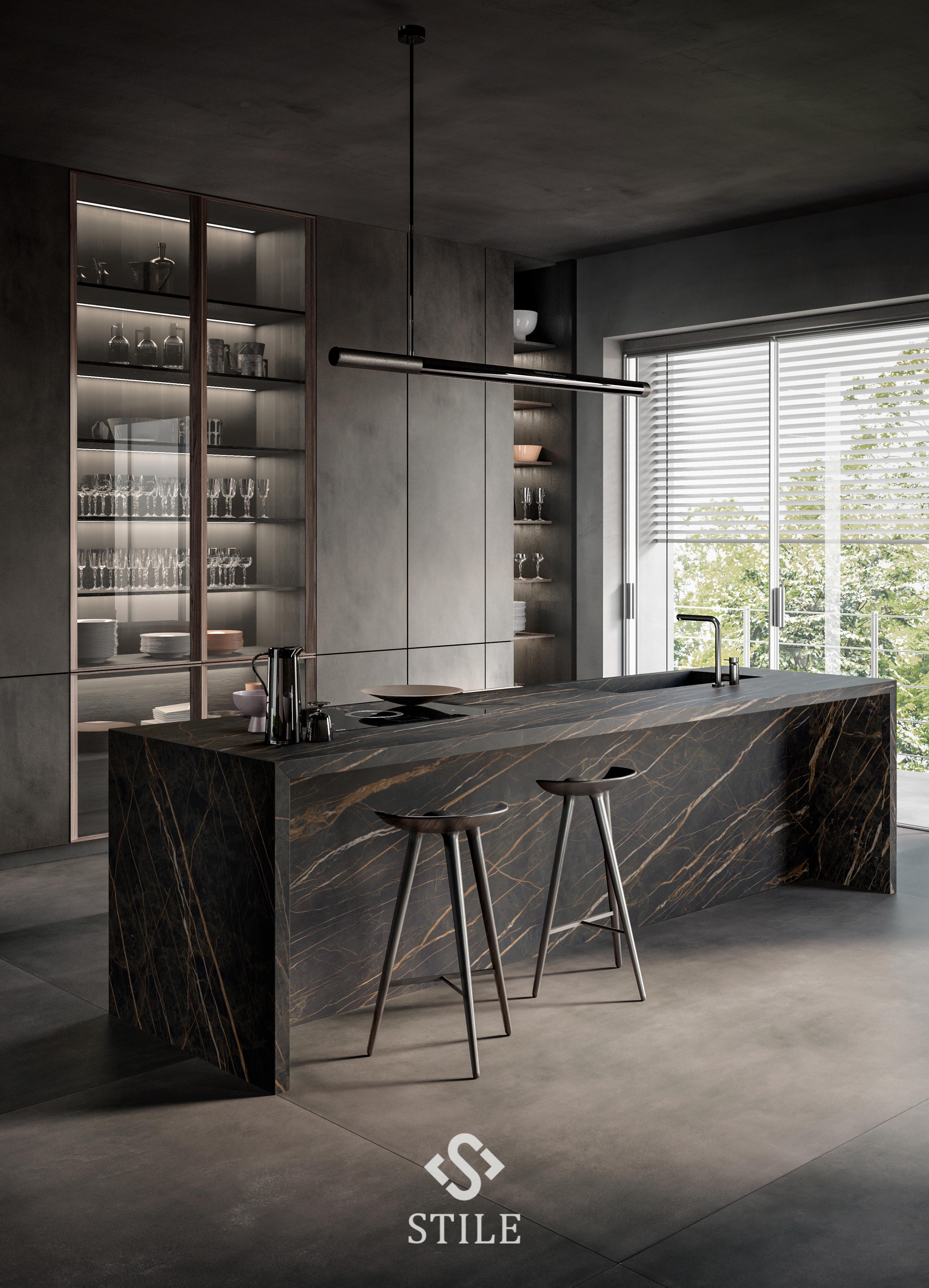
In recent years, sintered stone has gradually become a prominent name in the field of high-end architecture and interior design. Not only does it impress with its refined surface aesthetics, but this material also offers modern design solutions for living spaces and architectural projects.So what exactly is sintered stone, how is it made, and why is it increasingly favored by architects and homeowners? Let’s explore in detail in the article below.
1. What is Sintered Stone?
Sintered Stone, is a high-end engineered material made from natural minerals such as quartz, feldspar, silica, and mineral oxides. Its manufacturing process simulates the natural formation of stone beneath the earth’s surface, but at a much faster rate and under significantly higher pressure, resulting in superior hardness, durability, and resistance.
2. Composition and Manufacturing Process of Sintered Stone
Raw Materials
The main components of sintered stone include:
Quartz (SiO₂): 60–70% – provides hardness and abrasion resistance
Feldspar: 15–20% – enhances flexibility and heat resistance
Silica: 10–15% – improves mechanical strength
These materials are finely ground and evenly mixed to ensure a uniform structure, allowing for the accurate reproduction of natural stone patterns while offering superior technical performance such as durability, water resistance, and longevity.
Manufacturing Process
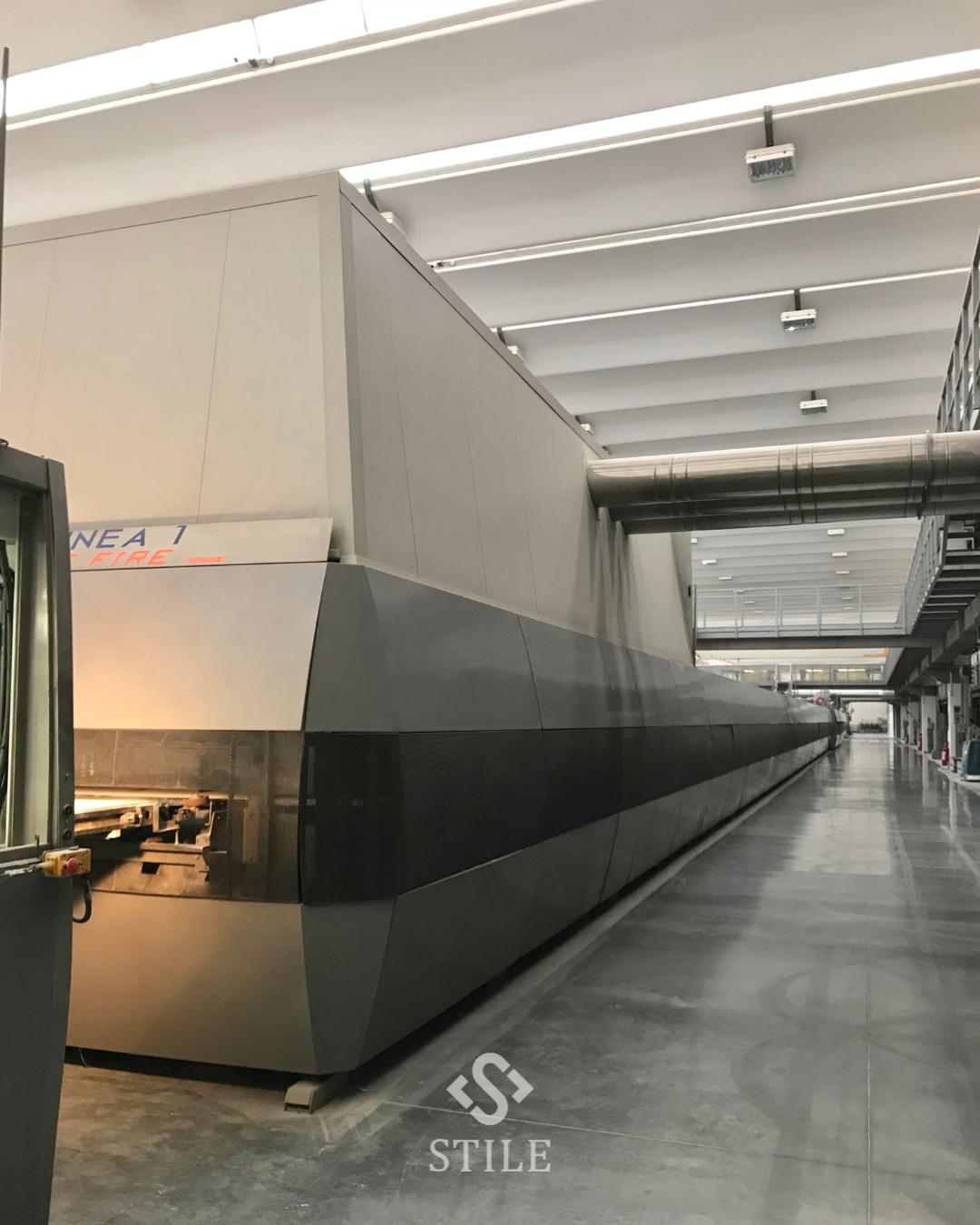
The manufacturing process of sintered stone is a complex technological sequence that requires advanced equipment and strict quality control:
Step 1: Raw Material Preparation
The materials mentioned above are finely ground to a micro size (below 10 microns) to ensure uniformity. The mixing ratio is precisely calculated based on proprietary formulas.
Step 2: High-Pressure Forming
The material mixture is fed into a hydraulic press with pressure up to 400 bar (approximately 4,500 tons), creating a dense slab and completely eliminating internal voids.
Step 3: High-Temperature Sintering (Sintering Process)
This is the most critical stage. The slab is placed in a kiln and heated gradually from 1200°C to 1500°C over 6–8 hours. This process creates “vitrification,” where mineral particles melt and bond at the molecular level, forming a dense and solid structure.
Step 4: Cooling and Finishing
The slabs are gradually cooled in a controlled environment to prevent internal stress, then cut, polished, and surface-treated according to design requirements.
Thanks to this process, sintered stone slabs achieve high hardness, excellent scratch resistance, and superior heat resistance compared to many traditional materials, resulting in a product with outstanding applications beyond natural stone.
=> See more: Laminam Certifications
3. Key Features of Sintered Stone
Outstanding Durability
Sintered stone offers excellent resistance to impact, pressure, and scratches. This allows the material to maintain its beauty over time during use.
Mohs hardness: 6–7 (similar to natural quartz)
Abrasion resistance: Class 4–5 (PEI standard)
Scratch resistance index: Superior to natural granite and marble.
Physical Properties
Water absorption: <0.1% (almost non-porous)
Density: 2,300–2,500 kg/m³
Flexural strength: >50 MPa (3–4 times higher than natural stone)
Thermal expansion coefficient: 6.5 × 10⁻⁶ /°C
Environmental Resistance
Heat resistance: Withstands temperatures up to 300°C without deformation or discoloration, making it safe for kitchen countertops and wall cladding near gas stoves.
UV resistance: Completely resistant to fading under sunlight, ideal for outdoor applications.
Chemical resistance: Resistant to acids, alkalis, and organic solvents.
- Antibacterial Properties: Thanks to its dense, non-porous structure with near-zero water absorption, sintered stone prevents the growth of bacteria.
Colors: Ranging from pure white to deep black, including metallic tones
Veining: Realistic replication of natural stones such as Calacatta, Carrara, and Statuario
Surface finishes: Polished, matte, anti-slip textured, and 3D patterns
- Easy Maintenance: The non-porous, stain-resistant surface makes cleaning quick and effortless.
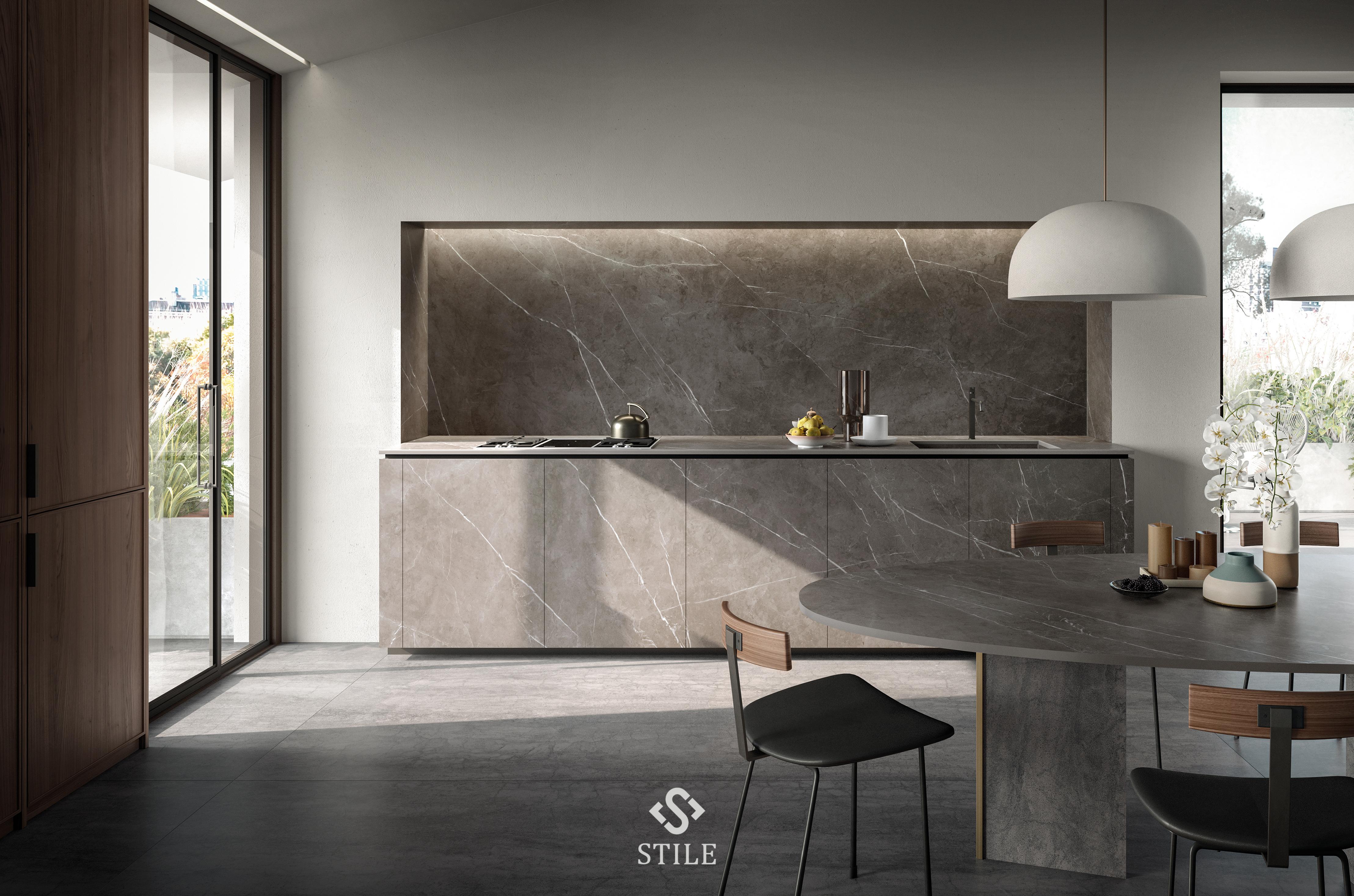
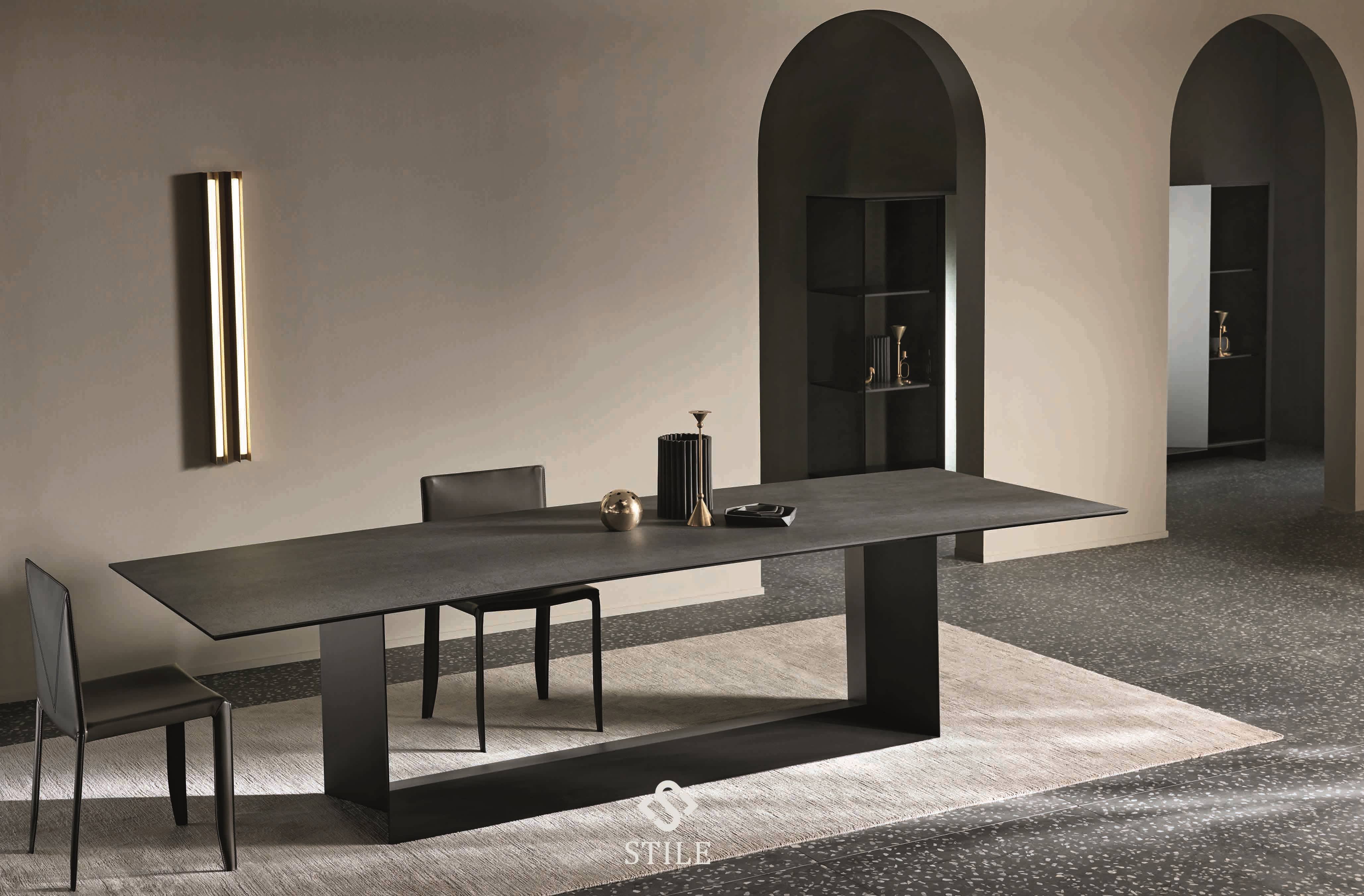
Large-format sintered stone slabs often feature luxurious veining that mimics natural marble or granite, creating a sophisticated and high-end aesthetic for any space.
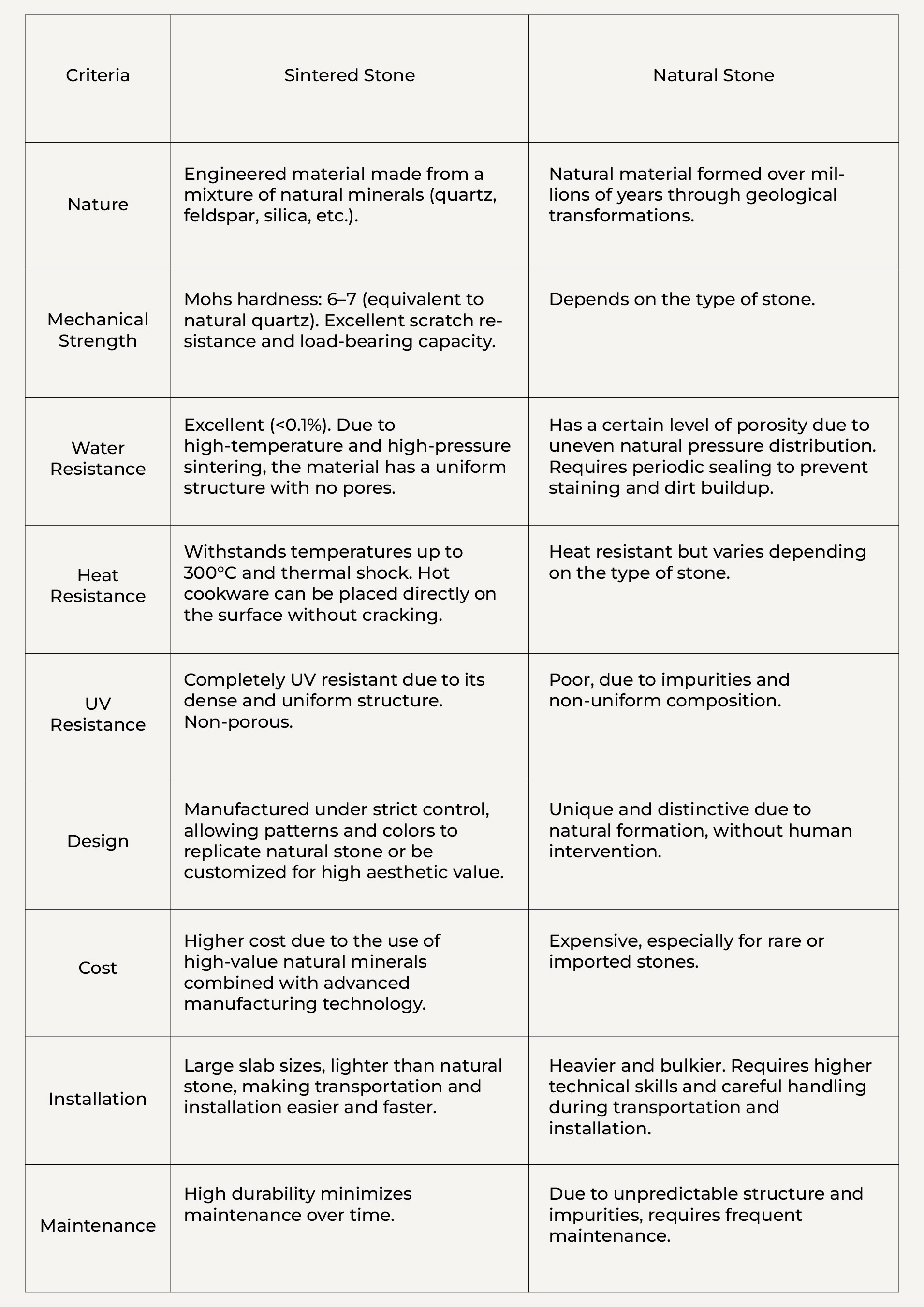
4. Key Advantages of Sintered Stone
Disadvantages of Sintered Stone
- High cost: Compared to conventional materials such as granite or engineered stone, sintered stone is generally more expensive.
- Difficult installation: Due to its high hardness combined with significant weight, cutting and installing sintered stone on-site requires skilled labor and specialized equipment.
5. Applications Of Sintered Stone In Interior Design
Thanks to its superior properties, sintered stone is widely used in modern design.
Interior Applications:
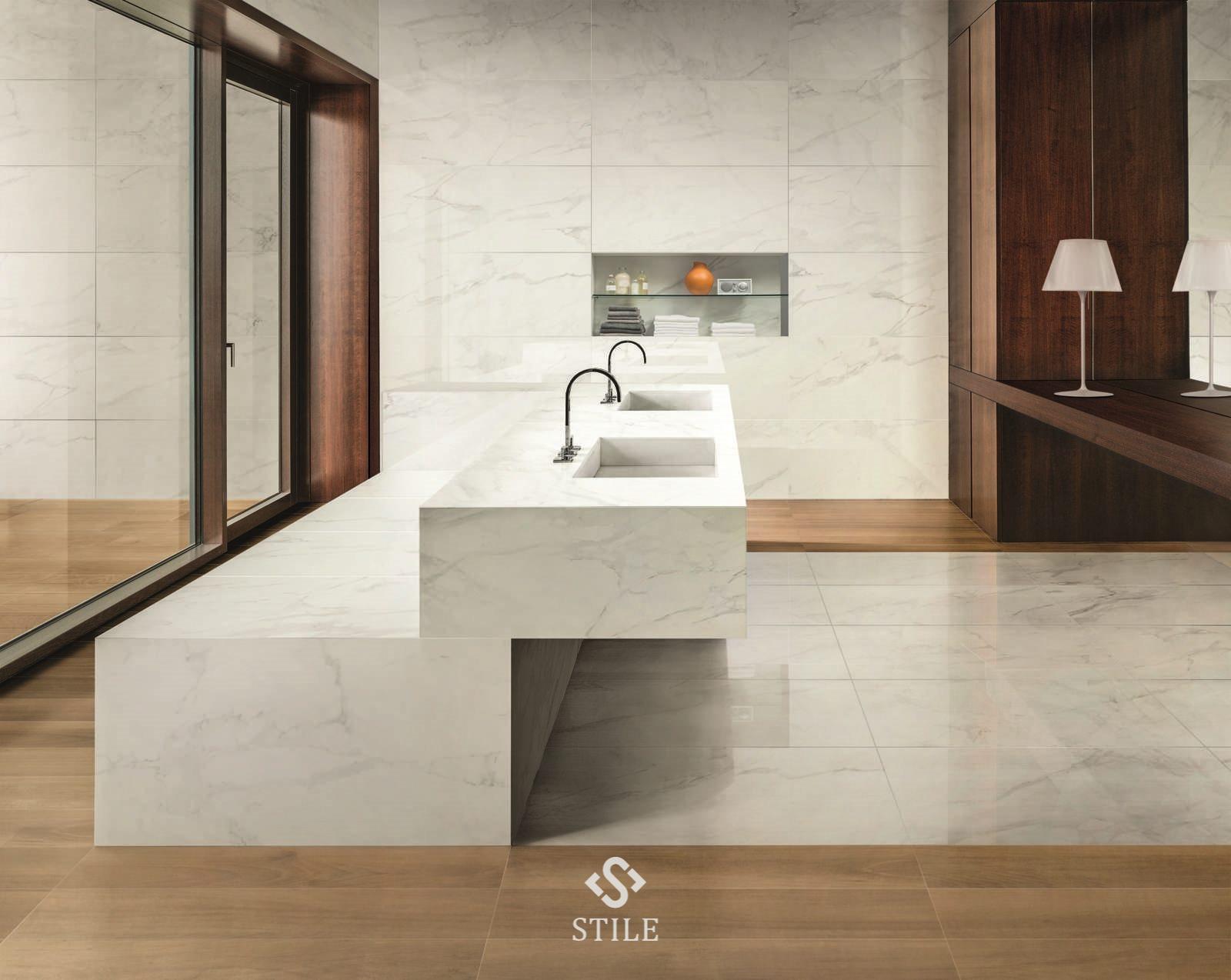
- Kitchen countertops: Ideal for kitchen counters, dining tables, and kitchen islands due to excellent heat resistance and grease resistance. Hot cookware can be placed directly on the surface.
- Bathroom vanities & sinks: Completely waterproof, resistant to cleaning chemicals, and does not yellow over time.
- Wall cladding: Can be fabricated into large slabs up to 1200×3000mm creating seamless surfaces with minimal joints.
- Flooring: High abrasion resistance, scratch-resistant, suitable for high-traffic areas, and capable of withstanding heavy loads.
Sintered stone comes in a wide range of colors and patterns, making it easy to match various design styles.
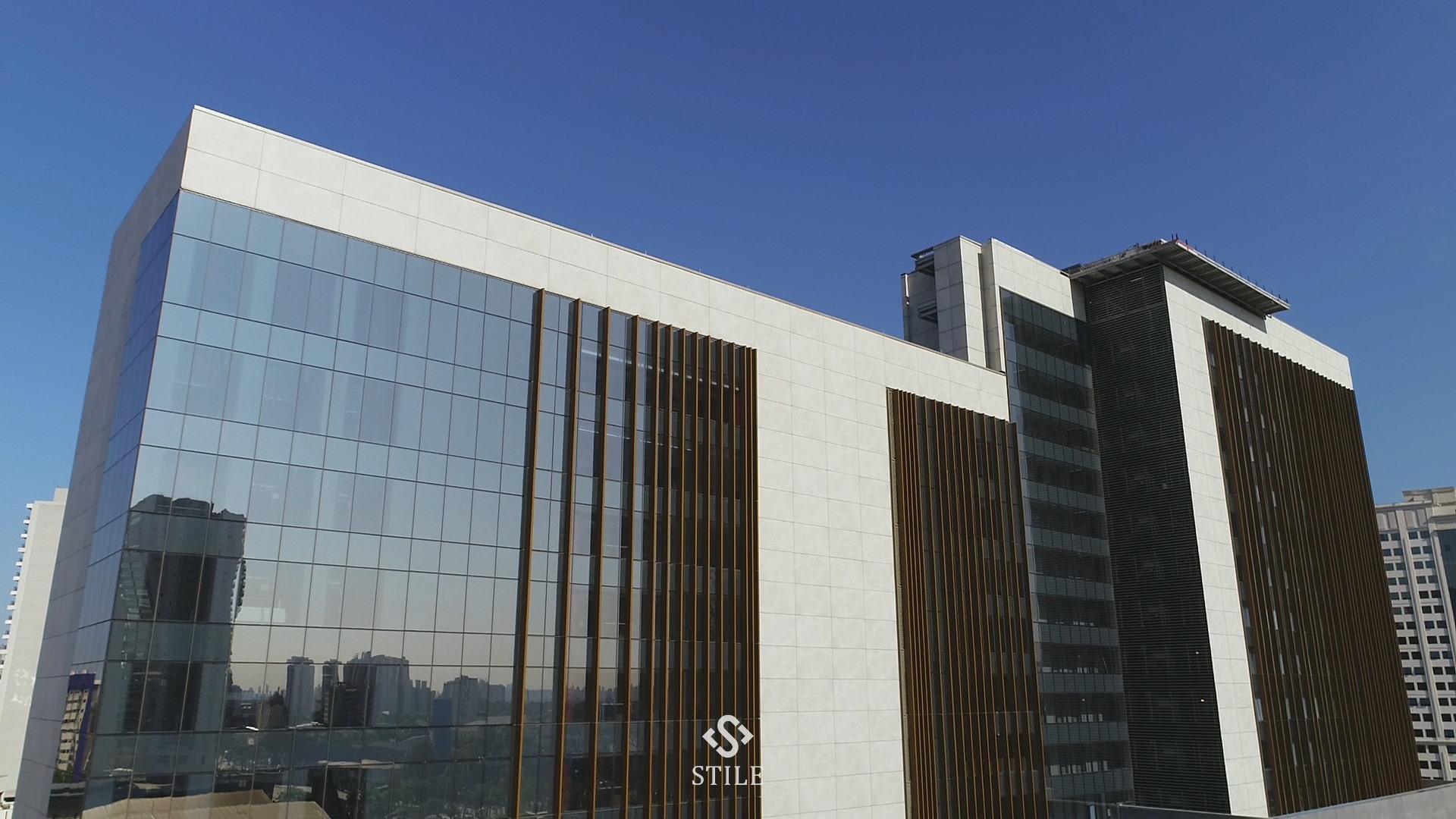
- Building facades: UV and weather resistant, maintaining original color over time, and lighter than natural stone.
- Swimming pool areas: Anti-slip, resistant to chlorine, stays cool under sunlight, and does not cause heat discomfort.
- Garden floors, pathways, outdoor furniture: Maintains stable physical properties and withstands temperature fluctuations without cracking.
- Luxury restaurants and hotels: Used in industrial kitchens and bar counters.
- Laboratories: Work surfaces resistant to chemicals, abrasion, and heavy loads.
- Showrooms and commercial spaces: Creates high-end aesthetic highlights.
6. Why Are Large Format Sintered Stones At STile So Popular?
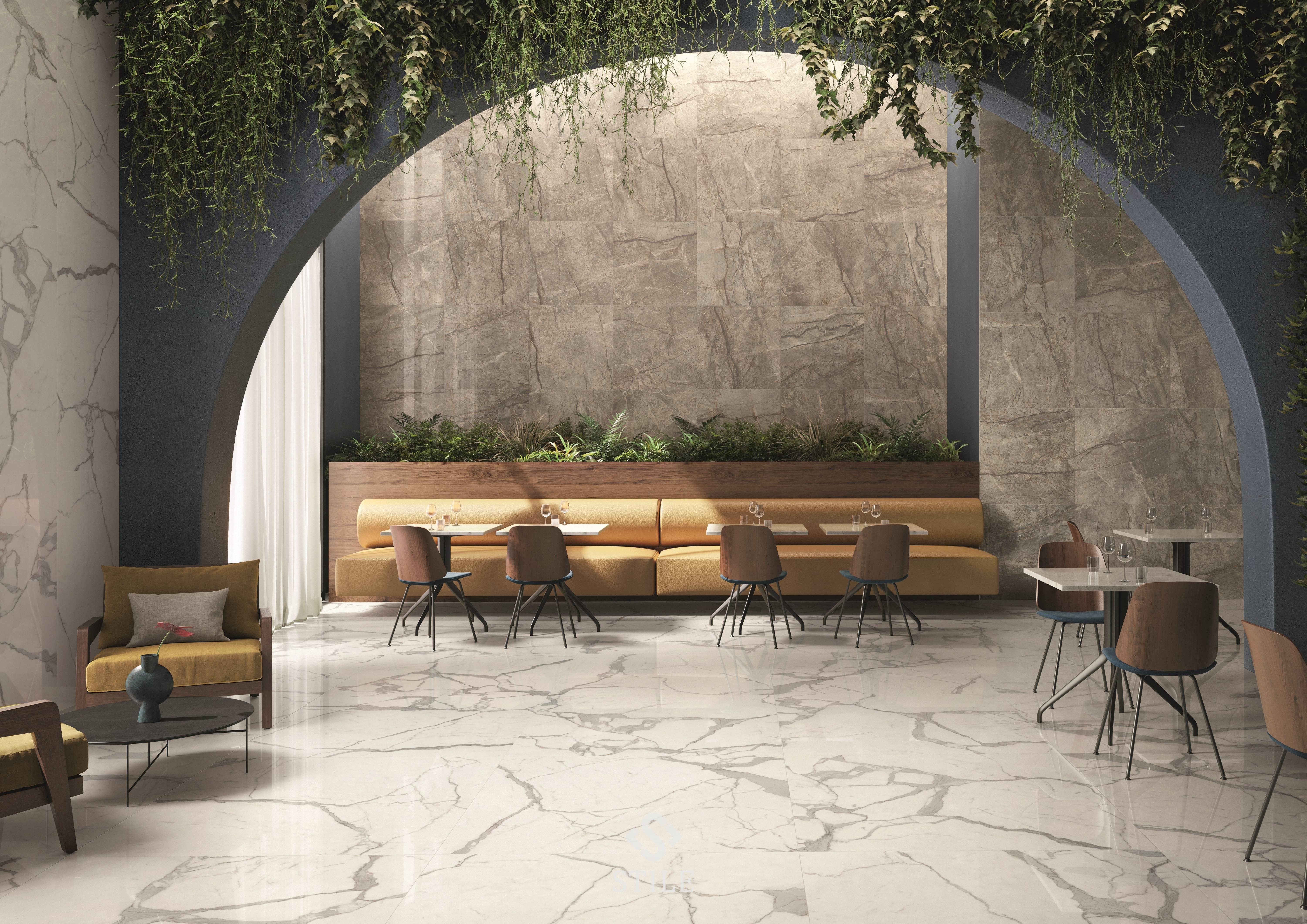
In modern design trends, large-format materials are becoming increasingly popular. Large-format sintered stone offers several outstanding advantages:
- Reduces grout lines, enhancing overall aesthetics
- Creates a more spacious and seamless visual effect
- Perfectly suits minimalist architectural styles
- Easy to install across large surfaces
As a result, large-format sintered stone is not only a construction material but also an artistic element in interior design.
=>Recommended sintered stone collections from STile
7. Tips For Choosing Quality Sintered Stone At STile
To ensure both aesthetic appeal and long-term durability, consider the following when selecting sintered stone:
- Choose products from reputable brands
- Check the thickness and hardness of the slab
- Select patterns that match your interior design style
- Choose a large format size suitable for your space